Tech & Tools
Building things and writing about what actually happens when they leave the demo. Less theory, more debugging logs. The Norse mythology metaphors are load-bearing.
My personal-ops bot’s weekly digest kept turning noisy logs into confident diagnoses. The fix was one rule: count first, interpret second, diagnose cautiously.
I built a Telegram bot to offload my executive function and accidentally gave myself a taskmaster. So I rebuilt it around one rule from the Talmud and the Daode Jing: be a reed, not a cedar — firm but yielding, advisory not prescriptive.
Completion rate is a trap. The moment your productivity system scores you on what percentage of commitments you finish, the rational move is to stop writing down anything you might actually fail at. I ran into this building my own personal ops system, and it turns out fixing it means thinking about Item Response Theory, Glicko ratings, and the Sharpe ratio.
Two years ago my Elul accountability experiment half-worked. The problem was friction, not motivation — and I had no mechanism to adjust expectations based on actual performance. So I built one: voice capture via Telegram, weekly LLM digest, and a daily agenda calibrated to what I’ve actually been completing versus missing.
How Haki’s Arabic audio went from browser text-to-speech to generated MP3s, dialect-specific fallbacks, and a still-imperfect pronunciation system.
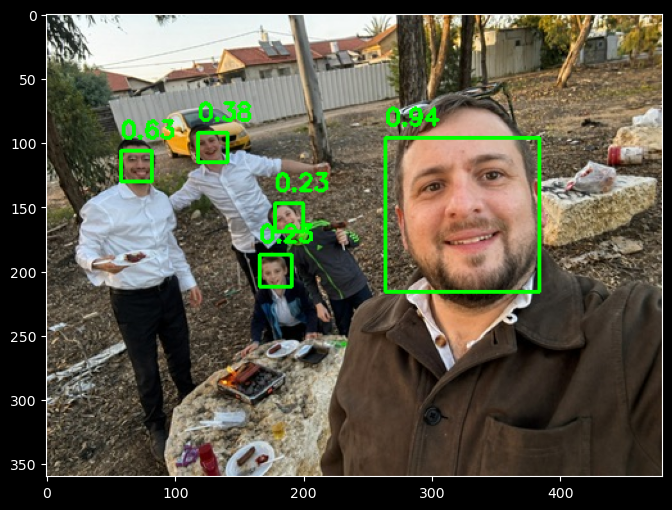
I wanted to see how hard face detection is in 2026. I tested Haar cascades, MediaPipe’s BlazeFace, and YOLO on real images. The short answer: it depends entirely on whether your subject is wearing sunglasses.
Some tips and tricks I use with Obsidian. Plugin recommendations and workflows.
A new blog for the Daily Derja
Book II of the Kubernetic Edda.
Book I of The Kubernetic Edda, A Saga of YAML, Blood, and Eventual Consistency
Hugo cloze shortcode for Tunisian Arabic posts with JS/CSS to reveal hidden answers.
Some Elixir basics (work in progress).